
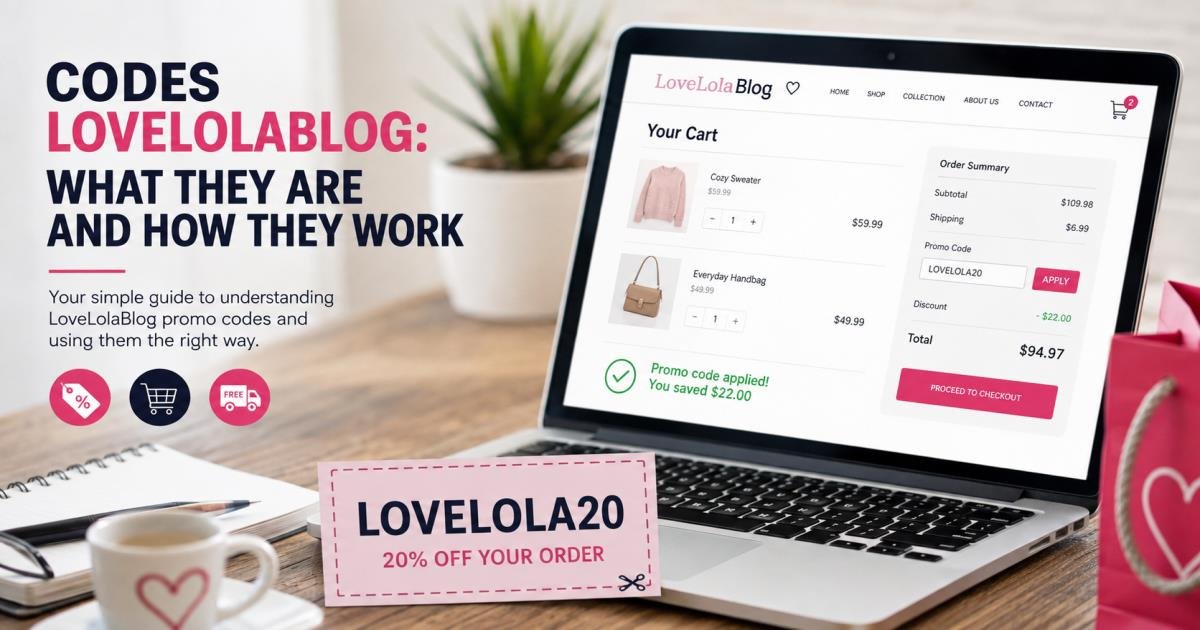
Codes LoveLolaBlog: What They Are and How They Work
Codes LoveLolaBlog are short promotional strings that give readers discounts or free shipping on products and services featured by LoveLolaBlog. You enter them at checkout on partner stores. A valid code lowers the total, removes shipping fees, or unlocks a limited offer.
People search for these codes when they want real savings on lifestyle items the blog recommends. The phrase can also turn up results about game codes or design snippets the site has covered, but most shoppers mean the money-saving kind.
This guide walks through exactly what codes lovelolablog do, how the process works from start to finish, the different types you will see, and practical steps that keep you from wasting time on dead codes.
What Are Codes LoveLolaBlog?
Codes LoveLolaBlog are the discount and promo codes that show up in LoveLolaBlog content, emails, and brand partnerships. They look like ordinary coupon codes: a few letters and numbers such as LOVELA15 or FREESHIP20.
When someone types the phrase into a search bar, they usually want current deals tied to the blog. The blog itself posts about many kinds of codes, from pizza coupons to game redemptions, yet the core request stays the same—find a working discount.
Promo codes, discount codes, and coupon codes function almost the same way. You type or paste the string into a box at checkout. The store system checks the rules and applies the savings if everything matches. The only real difference sits in how the offer is labeled.
Confusion arises because some older or third-party pages mix the term with HTML snippets or private relationship codes. For everyday use, stick to the discount meaning. That is what delivers actual savings.
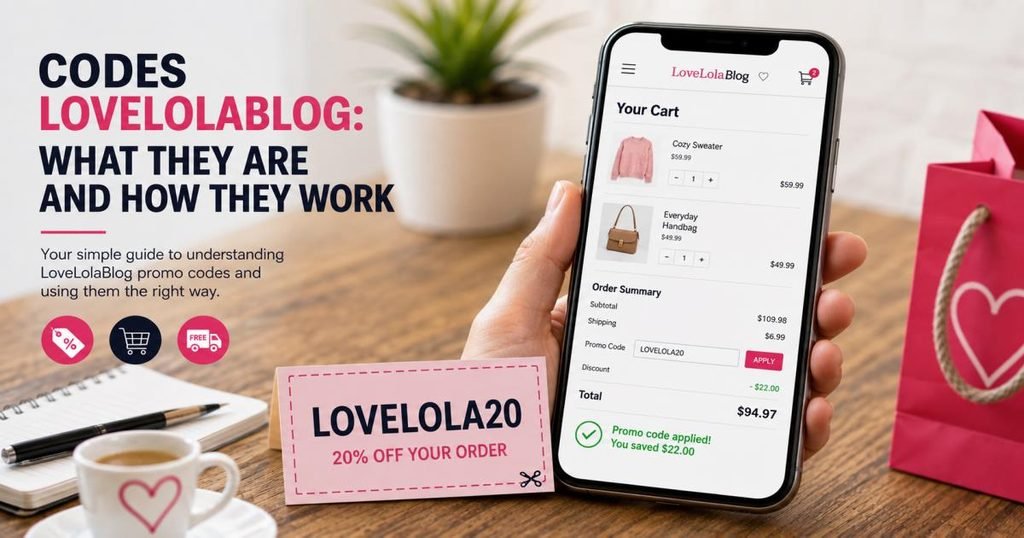
How Do Codes LoveLolaBlog Work?
A brand or the blog creates the code and sets clear limits: end date, minimum spend, eligible products, and how many times one person can use it. The code then travels through blog posts, newsletters, or social updates.
You copy the code and head to the store checkout page. Most sites place a small field labeled “Promo code,” “Discount code,” or “Coupon code” near the order total. Paste the string exactly as written and hit Apply.
The system runs a quick check. If the code is live, your cart meets the rules, and the items qualify, the discount appears right away. You finish the purchase and the lower price sticks.
If the code fails, the page usually shows a short message. Common reasons include an expired date, a cart that sits below the minimum, items left off the promotion, or a typing mistake. Some codes work only for first-time buyers or one order per account.
see also: Pixelspinx Com Explained: Complete Beginner’s Guide
What Types of Codes LoveLolaBlog Can You Find?
Percentage-Off Codes
These cut a set percentage from the eligible total. A 10 percent or 20 percent code is typical. Larger carts often produce bigger dollar savings, provided every item qualifies.
Fixed-Amount Discount Codes
These subtract a flat sum such as $10 or $25. They work best on mid-size orders where a percentage might save less money. A minimum purchase amount usually applies.
Free-Shipping Codes
These erase the shipping charge. They help most when the order contains heavier goods. Some free-shipping codes still require a minimum order value or apply only in certain regions.
Limited-Time or Seasonal Codes
Holiday, flash-sale, or seasonal codes run for a short window. They often carry stronger discounts. Once the window closes, the code stops working for everyone.
Exclusive or New-Customer Offers
Some codes reach only newsletter subscribers or first-time shoppers. These can deliver higher savings but come with tighter rules, such as one use per account.
Where Can You Find Legitimate Codes LoveLolaBlog?
Begin on the official LoveLolaBlog site, especially any Codes or Coupons section. Posts there sometimes list current partner offers.
Newsletters deliver codes straight to your inbox. Many readers receive exclusive strings before they appear elsewhere.
Verified social accounts connected to the blog share short-lived deals and reminders. Check the official profiles rather than random pages that claim the same name.
Brand partners sometimes publish co-branded codes on their own sites or in joint campaigns.
Third-party coupon sites collect codes from many places. They can surface working offers, yet the lists go stale fast. Always cross-check any third-party code against the original blog post or the retailer’s own page before you rely on it.
How to Use Codes LoveLolaBlog Step by Step
- Find a current code from a reliable source.
- Read the full terms and note the expiration date.
- Select only products that the code allows.
- Place those items in your cart.
- Move to the checkout page and find the promo-code field.
- Enter the code exactly—copy and paste to avoid errors.
- Click Apply and watch the total update.
- Confirm the discount shows correctly, then complete the order.
These eight steps cover the process most stores use. Skipping the terms check is the fastest way to hit a rejection message.
Why a LoveLolaBlog Code May Not Work
Expired codes are the top reason. Promotions end on a set date and the system cuts them off at midnight or at a fixed hour.
Many codes demand a minimum cart value. If your total sits even one dollar below the threshold, the code fails.
Product exclusions block sale items, gift cards, or certain categories. The terms page lists them.
New-customer restrictions keep existing accounts from using welcome offers. One-code-per-order rules stop you from stacking multiple discounts.
Typing mistakes—extra spaces, wrong capital letters, or missing characters—cause the system to reject the string. Regional limits can also apply; a code valid in the United States may not work for shipping addresses elsewhere.
Finally, some promotions simply end early when inventory runs out or the campaign budget is spent.
How to Check Whether a LoveLolaBlog Code Is Legitimate
Start with the source. Codes that appear on the official blog, newsletter, or verified social posts carry higher trust.
Note the publish or update date. New codes are more likely to be successful.
Read every condition: minimum spend, product limits, and usage caps.
Watch for requests that ask for passwords, bank details, or extra personal data outside normal checkout. Real codes never need those.
Skip links that look off or arrive in unexpected messages promising “exclusive” savings. Confirm any questionable offer through the official channels or the retailer’s support page.
Are Codes LoveLolaBlog Available to Everyone?
Geography matters. Some codes work worldwide; others limit shipping to specific countries.
Most stores require an account, though a few accept guest checkouts.
New-customer codes stay closed to people who already hold an account. Existing-customer codes may exclude first-time buyers.
Product rules vary by promotion. One code may cover the whole site while another leaves out sale items or digital goods.
Each offer carries its own set of terms. Treat every code as unique rather than assuming broad access.
Codes LoveLolaBlog vs. Regular Discount Codes
Both types follow the same checkout process. You enter the string, the system validates it, and the savings appear if the rules match.
The difference sits mainly in distribution. Codes lovelolablog often travel through lifestyle posts, email lists, and partner campaigns that match the blog’s tone. Regular discount codes may come from large coupon aggregators or store-wide sales with less personal framing.
Ignore the label and focus on the actual terms. A code that meets your cart and your location saves money whether it carries the LoveLolaBlog name or not.
Tips for Getting the Most From LoveLolaBlog Codes
Sign up for the newsletter so exclusive codes land in your inbox.
Watch major shopping periods—holidays, back-to-school, and end-of-season sales—when stronger codes typically appear.
Look at the final price after the code applies rather than the percentage alone. Shipping, taxes, and exclusions change the real savings.
Check the expiration date every time you shop. A code that worked last week may already be gone.
Read the exclusions before you fill the cart so you avoid ineligible items.
Save the order confirmation email that shows the code was accepted. Those details help if you need support later.
Final Takeaway: What to Know Before Using Codes LoveLolaBlog
Codes LoveLolaBlog give readers a straightforward way to save on products and services linked to the blog. Enter a current, verified code at checkout, meet the stated rules, and the discount appears. The safest path starts with official sources, careful reading of the terms, and quick checks against third-party lists. Not every code works for every shopper or every cart, yet a few minutes of care usually turns a good offer into real savings.
Frequently Asked Questions About Codes LoveLolaBlog
What are codes lovelolablog?
They are promotional discount codes shared through LoveLolaBlog posts, emails, and partner offers. Most deliver a percentage off, a fixed dollar amount, free shipping, or a short-term perk when you enter them at checkout.
How do I use a LoveLolaBlog code?
Find a current code, add only eligible items to your cart, go to checkout, paste the code into the promo field, apply it, confirm the discount, and finish the purchase.
Where can I find valid LoveLolaBlog codes?
Look first on the official blog, in newsletters, and on verified social accounts. Cross-check any third-party listing before you use it.
Why is my LoveLolaBlog code not working?
The code may have expired, the cart may sit below the minimum, certain products may be excluded, the offer may be limited to new customers, only one code may be allowed per order, or a typing error may have occurred.
Do LoveLolaBlog codes expire?
Yes. Nearly every code carries an end date. Always check the terms before you shop.
Can I use more than one code at a time?
Most stores allow only one promo code per order. A few rare promotions permit stacking—read the specific rules to be sure.
Are third-party LoveLolaBlog codes safe to use?
They can work if you verify them against the official source. Avoid any offer that asks for extra personal information or leads to suspicious pages.



One Comment