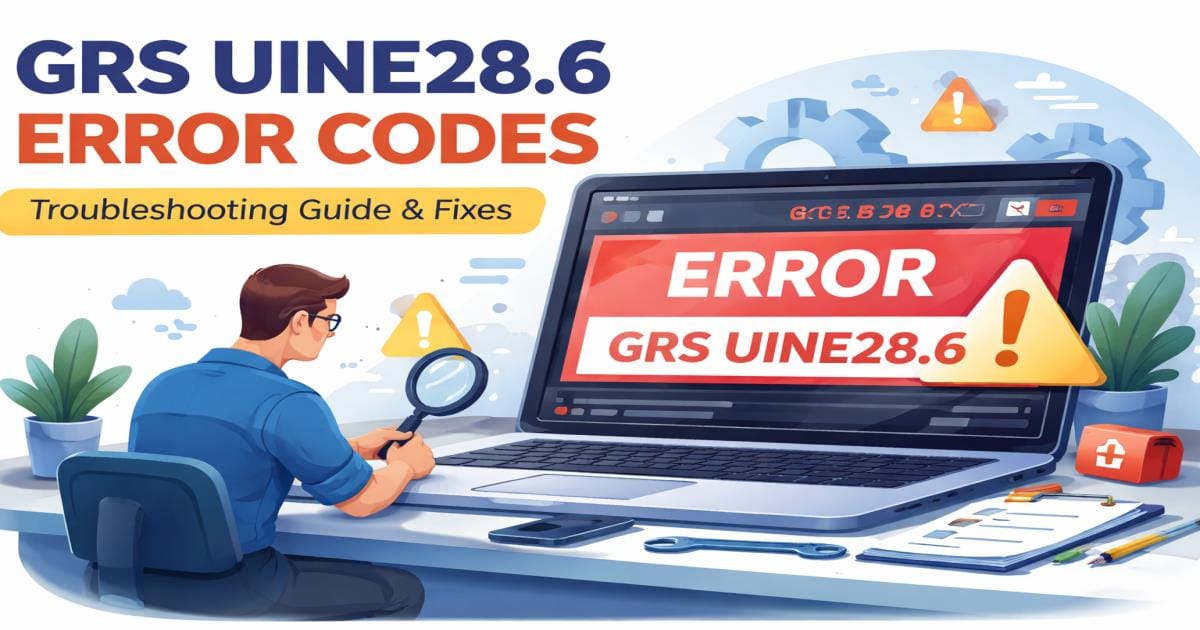
GRS UINE28.6 Error Codes: Meaning, Causes, and Practical Fixes
Seeing a strange code like GRS UINE28.6 error codes can be frustrating, especially when there is no obvious explanation on the screen. The good news is that most error codes follow the same basic pattern: they point to a problem with startup, communication, software compatibility, configuration, or a failed update process. In the public sources I reviewed, the exact phrase GRS UINE28.6 appears mainly on third-party pages rather than in clear official documentation, so the safest approach is to treat it as a troubleshooting label and focus on proven fix methods instead of guessing a hidden meaning.
This guide explains what the code may represent, why it can happen, how to diagnose it step by step, and when it is smarter to stop troubleshooting and get professional help. The advice below follows the same general repair logic recommended in major support guides for error codes, update failures, connection issues, and startup problems: restart first, check updates, verify connections, and move to deeper recovery steps only if needed.
What Are GRS UINE28.6 Error Codes?
Because the exact system behind GRS UINE28.6 error codes is not clearly documented in the public material I found, the safest interpretation is that it is a code family used to flag a system-level problem rather than a single, universal fault. Publicly visible pages that mention the code usually describe it in broad terms, such as a mismatch, communication issue, damaged files, configuration issue, or software version conflict. That means the number itself is less important than the pattern of behavior around it: when it appears, something is preventing the device, app, or service from completing its normal task.
In practical terms, a code like this usually means one of three things: the system cannot start correctly, one part of the system cannot talk to another part, or a required update or setting is missing. That is why general troubleshooting guides from major support teams repeatedly start with restart, software updates, and connection checks before moving to repair or recovery steps.
Why the exact meaning is hard to pin down
A good error code usually comes from an official manual, support page, or diagnostics guide. In this case, the public references I found are mostly third-party pages and reposts, not a clearly authoritative source that defines the code in detail. That matters because a code that looks technical can still be used loosely by different sites, and the same-looking error may not mean exactly the same thing in every context.
So, instead of pretending there is one perfect definition, this article focuses on what users actually need: how to identify the likely cause, what checks to run first, and how to avoid making the problem worse. That is a much safer and more useful approach when the exact device or platform is unclear.
Common Causes of GRS UINE28.6 Error Codes
Most error-code problems fall into a few familiar categories. The third-party pages that mention GRS UINE28.6 commonly point to configuration mistakes, damaged files, network breakage, or incompatible software versions. Those are not official definitions, but they line up well with the types of issues support teams often troubleshoot in update and device-repair cases.
1. Temporary software glitch
Sometimes the system is not broken in a serious way. It simply gets stuck during startup, loading, syncing, or updating. Support documentation across major platforms regularly recommends a restart first because a reboot can clear temporary state, release locked resources, and reset a process that failed mid-run.
2. Network or communication failure
If the code appears while a device is trying to connect to a service, install something, or verify information online, network trouble is a strong possibility. Common culprits include weak Wi-Fi, unstable internet, router issues, proxy settings, or a blocked connection. Google’s support guidance for connection and loading problems specifically recommends checking the internet connection, reloading, and restarting the device or network equipment.
3. Outdated software or firmware
A very common reason for update-related errors is a simple version mismatch. If the device, app, or companion software is old, the system may fail to validate a file, complete a sync, or communicate with its service. Official support pages for Windows, Apple devices, and Android all treat updates as an early troubleshooting step for exactly this reason.
4. Corrupted or missing files
If a required file is damaged or removed, the system may not know how to continue. This can happen after an interrupted update, an incomplete install, storage problems, or a bad shutdown. Error-code support documentation often recommends repairing the installation, re-running the update, or restoring the system once basic fixes fail.
5. Wrong settings or misconfiguration
A code can appear simply because the system is pointed at the wrong network, wrong account, wrong path, or wrong version. That is why many troubleshooting steps ask you to check settings carefully instead of jumping straight to a reset. If the setup is out of sync, the code may repeat until the configuration is corrected.
6. Hardware or connection problem
If the issue happens only when a cable, adapter, port, battery, sensor, or accessory is involved, the source may be physical rather than software-based. Support guides for startup and restore problems often recommend checking direct connections, trying another cable, and verifying that the device is properly recognized by the computer or network.
How to Diagnose the Error the Smart Way
Before you start changing settings, take a minute to observe the pattern. That can save a lot of time and prevent random trial-and-error. A useful diagnosis starts with the question: when does the code appear, and what was happening right before it? That matters because update errors, connection errors, and startup errors usually have different triggers even if the code format looks similar.
Ask these simple questions
Did the error appear after a restart, an app update, a system update, a reconnect, or a login attempt? Did anything change recently, such as new software, a new router, a new cable, a reset, or a power outage? Is the error constant, or does it happen only under one condition? These questions help separate a temporary glitch from a deeper compatibility or connection issue.
Look for the error pattern
If the code appears immediately at startup, think boot or recovery trouble. If it appears during download, install, or sync, think update or network trouble. If it appears when using one feature but not others, think configuration, account, or accessory issues. This pattern-based approach is common in official support documentation because it narrows the likely cause much faster than guessing.
Step-by-Step Fixes for GRS UINE28.6 Error Codes
The best repair path is usually the simplest one first. That is not just a convenience rule; it is how major support teams structure their own troubleshooting. Restart, update, verify connections, and only then move into deeper recovery steps if the issue remains.
1. Restart the device or app
A clean restart is the first fix worth trying. Close the app, power down the device if needed, wait a few seconds, and start again. If the code came from a browser, app, or connected device, restarting both sides may help clear a temporary handshake problem. Major support guides for Windows, Android, Apple devices, and Chrome all recommend a restart as an early step.
2. Check for updates
Outdated software is one of the easiest causes to miss. Install pending app updates, operating system updates, and any device firmware updates that are available. Apple and Microsoft both place updates near the top of their official troubleshooting flows for update and error-code problems, and Android guidance also recommends checking for software updates when a device is acting up.
3. Verify your internet connection
If the code appears during login, syncing, downloading, or cloud access, test the connection. Switch between Wi-Fi and mobile data when possible, reload the page or app, and check whether other sites or services work normally. Google’s help guidance for connection and loading issues specifically recommends checking the network, switching connection types, and restarting the device or modem/router when needed.
4. Recheck settings and permissions
Misconfiguration can trigger an error even when nothing is technically “broken.” Confirm the correct account, password, network, device mode, and permission settings. If the code appeared after a settings change, undo the most recent change first. That kind of targeted rollback is often safer than a full reset because it preserves your other data and settings.
5. Remove and reconnect the problem device or accessory
If the issue involves a cable, dock, adapter, sensor, printer, or other accessory, disconnect it and try again using a direct connection. Official restore and update guidance from Apple recommends plugging the device directly into the computer and avoiding unnecessary intermediaries when troubleshooting connection failures.
6. Clear cache or temporary data
If the error appears in an app or browser-like environment, cached data can sometimes hold a broken session or an old file. Clearing temporary data is often a low-risk way to refresh the local environment before going further. In general, it is a common support step when a service is loading incorrectly or behaving inconsistently.
7. Try the repair or troubleshooter option
When a system offers a built-in troubleshooter or repair tool, use it. Microsoft explicitly recommends running the Windows Update troubleshooter for update-related error codes, and similar built-in repair tools are common across operating systems and apps. These tools are useful because they can detect broken services, invalid update states, or local conflicts without requiring a full reset.
8. Reset only after the easier steps fail
A reset is a bigger step, so treat it as a last resort rather than a first move. Apple and Microsoft both place restore and recovery steps after basic attempts such as restart, updates, and connection checks. That sequence protects your data and keeps you from wiping settings that were not the real problem.
When a Factory Reset Makes Sense and When It Does Not
A factory reset can be useful when the error is caused by a broken configuration, repeated software failure, or a system that will not stabilize even after ordinary repair steps. But it is also one of the most disruptive choices because it can remove apps, settings, and local data. That is why major support guidance treats recovery and restoration as later steps, not the first answer.
A reset makes more sense when the problem is persistent, reproducible, and linked to the core system rather than one small feature. It makes less sense when the issue only happens once, after a bad connection, or immediately after an incomplete update. In those cases, a simple restart, update, or network check is usually the better first move.
Before you reset, do this first
Save important files, note the exact message, record the steps that triggered the error, and confirm whether you have recent backups. If you plan to contact support, this information can save time and help the technician decide whether the issue is software, network, account, or hardware related. This kind of documentation is valuable because even the best support team works faster when the pattern is clear.
A Simple Troubleshooting Checklist
Here is a practical sequence you can follow without overcomplicating things:
- Restart the device or app.
- Check for software and firmware updates.
- Test the internet connection.
- Reconnect cables, accessories, or network equipment.
- Review recent setting changes.
- Run built-in repair or troubleshooting tools.
- Use recovery or reset only if the error keeps returning.
This sequence is useful because it starts with the least risky fixes and moves toward stronger recovery options only when the easy steps fail. That is the same logic used in official support documentation for error codes and update failures.
Prevention Tips for Fewer Error Code Problems
The easiest error code to fix is the one that never shows up. While no setup is perfect, a few habits can reduce the odds of future trouble.
Keep software updated regularly. Many errors come from version mismatch, missing fixes, or outdated system components.
Use stable connections for downloads, syncs, and updates. Interrupted transfers and weak networks are a common source of failed installs and loading issues.
Avoid repeated forced shutdowns. Sudden power loss or hard resets can leave files in an incomplete state, which can later trigger startup or update problems. This is one reason support guides emphasize orderly restarts and recovery steps instead of abrupt power cuts.
Keep backups of important files. If the only fix left is a recovery or reset, backups make the process much less stressful. That advice is especially important when an error may be tied to a system update, restore attempt, or device repair.
Pros and Cons of DIY Troubleshooting
Pros
DIY troubleshooting is fast, usually free, and often solves temporary issues without waiting for support. Restarting, updating, and checking the connection can fix a surprising number of problems when the code is caused by a simple conflict or network hiccup.
Cons
The downside is that guessing can waste time, and more aggressive steps like resets can cause data loss if done too early. That is why it is better to follow a structured path and stop when the situation seems beyond basic repair.
When to Seek Professional Help
Professional help makes sense when the error keeps returning after restarts, updates, and connection checks; when the device will not boot normally; when you suspect a hardware issue; or when the problem started right after a failed restore or major update. Official support guidance for Windows and Apple devices both point to recovery or service when standard troubleshooting is no longer enough.
It is also wise to ask for help if the system is important for work, school, or daily use and you cannot afford a long outage. In those cases, a fast diagnosis from a technician may be cheaper than several rounds of trial-and-error. That is especially true if you are dealing with a connected device, a login system, or a service where the cause may be hidden behind the error code.
Final Thoughts
The best way to think about GRS UINE28.6 error codes is not as a mysterious one-line answer, but as a signal that something in the system needs attention. The public information around this exact phrase is limited and mostly third-party, so the most responsible approach is to use general error-code troubleshooting methods that are backed by major support guidance. In practice, that means starting with a restart, checking updates, verifying your connection, reviewing recent changes, and only then moving to recovery or reset options.
If you take one thing from this guide, make it this: do the simple, low-risk fixes first. They solve more problems than most people expect, and they keep you from making a small issue worse. If the code still returns after those steps, the problem is likely deeper and may need professional repair or a full recovery process.
FAQ
Q1. What does GRS UINE28.6 mean?
There is no clear official public definition in the sources I reviewed. Publicly visible pages that mention it describe it in broad troubleshooting terms, such as a configuration, file, network, or compatibility issue.
Q2. What is the first thing I should try?
Restart the device or app first. Major support guides for error codes and update problems consistently recommend restarting as an early step.
Q3. Can internet problems cause this error?
Yes. Connection failures, unstable Wi-Fi, router issues, and blocked network access can all trigger error-code behavior during downloads, syncs, or sign-ins.
Q4. Should I update my software?
Yes. Updates are one of the most common fixes for error-code problems because they can repair bugs, compatibility issues, and broken services.
Q5. Is a factory reset the best fix?
Not usually. A reset is typically a last resort after restart, updates, connection checks, and repair tools have failed.
Q6. What if the error keeps coming back?
If the code returns after basic troubleshooting, the issue may be deeper than a temporary glitch. At that point, recovery steps, hardware checks, or professional help may be needed.
Q7. Can I fix it without losing data?
Often, yes. Restarting, updating, checking settings, and verifying connections are all low-risk steps that do not normally erase personal data.
Q8. When should I stop troubleshooting?
Stop when the issue becomes repetitive, starts affecting important data, or begins to look like a hardware or recovery problem. That is the point where service or advanced support is usually the smarter move.