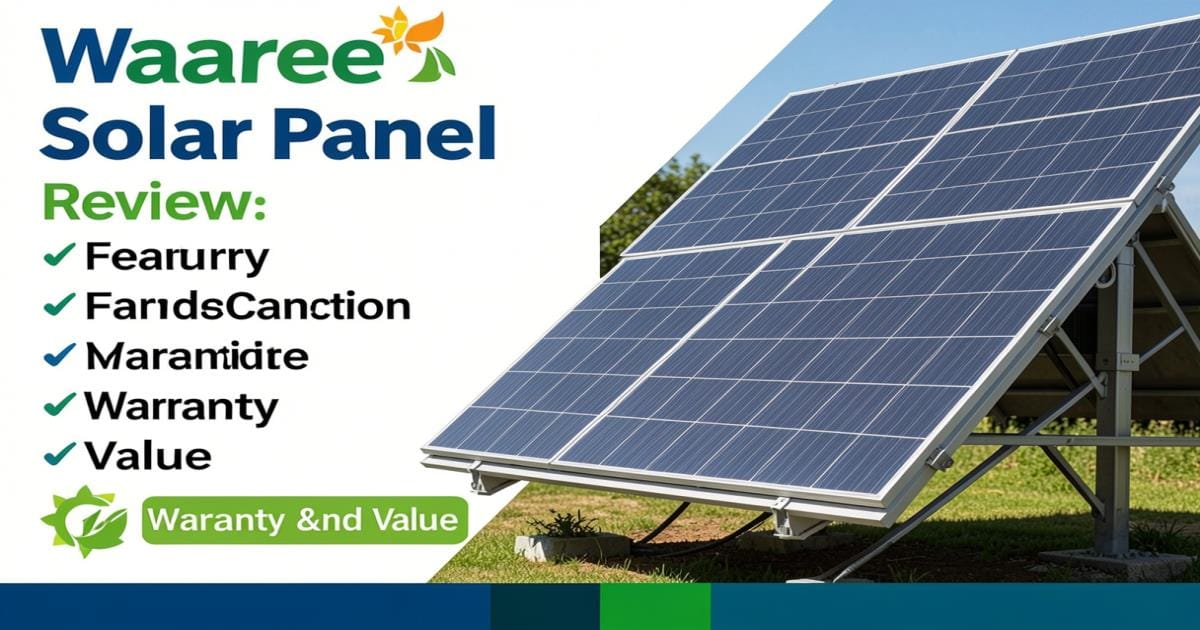
Waaree Solar Panel Review: Features, Warranty, and Value
If you are researching a waaree solar panel, you probably want more than a brand name. You want to know whether the panel is reliable, what technologies it uses, how strong the warranty is, and whether it makes sense for a home or business. That is the right way to shop for solar.
Waaree Energies positions itself as a major global solar company and publishes a broad range of module options, including HJT, TOPCon, PERC, flexible, and customized solar panels. Its official materials also show a large international footprint and detailed product documentation, which matters because solar is a long-term purchase, not a quick one.
In this blog guide, I will break down the brand in plain English, explain the most important specs, cover the warranty in a practical way, and help you decide whether a Waaree solar panel is a good fit for your rooftop solar installation, commercial solar project, or solar power system comparison.
What Is a Waaree Solar Panel?
A Waaree solar panel is a photovoltaic module made by Waaree Energies. In simple terms, it is a panel that converts sunlight into electricity. The company’s product range is not limited to one style of module. Its official module page highlights options such as HJT, TOPCon, PERC, flexible modules, and custom-built modules for different project needs.
That variety matters because not every roof, business site, or utility-scale project needs the same panel. A homeowner may care most about roof space and long-term output. A business buyer may care more about power density and durability. A developer may care about module format, voltage, mounting compatibility, and warranty terms. Waaree’s public documentation shows it trying to serve all of those segments rather than only one niche.
Waaree also publishes datasheets, manuals, and certifications through its official download center, which is useful for buyers who want to check technical details before making a decision. That is a good sign for transparency because solar panels should be judged by their documented specifications, not just marketing claims.
Why People Search for Waaree Solar Panel
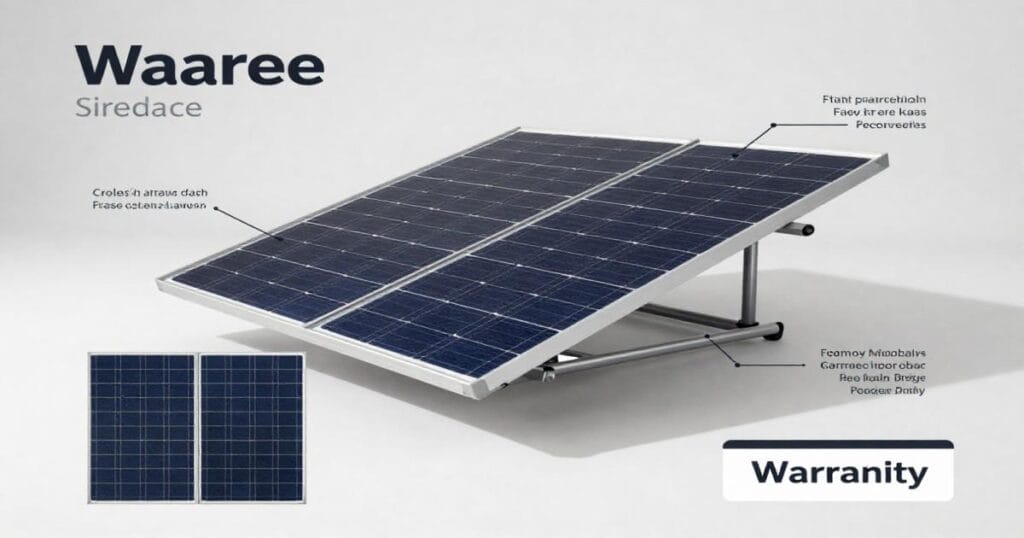
People usually search for a Waaree solar panel for one of three reasons.
First, they want a brand with a broad product line. Some buyers need high-efficiency solar panels for limited roof space. Others want bifacial solar panels for better energy harvest in the right site conditions. Others need a balanced module that is easier to install and maintain. Waaree’s module range is built around those choices.
Second, they want the warranty details. Solar panels are expected to last for decades, so warranty terms are one of the most important parts of the purchase. Waaree’s official warranty statements are detailed and specific, which helps serious buyers compare options.
Third, they want to know whether the brand is established enough to be trusted. Waaree’s official materials describe it as a global energy transition company, and its module sheet references a presence in over 350 locations nationally and 68 countries globally. Those details do not guarantee the perfect panel for every project, but they do show scale and market reach.
Key Technologies Behind Waaree Solar Panels
TOPCon Solar Panels
TOPCon stands for Tunnel Oxide Passivated Contact. You do not need to memorize that phrase to understand the value. In practical terms, TOPCon is one of the newer mainstream solar cell technologies, and it is widely associated with higher efficiency and strong long-term performance. Waaree’s official materials show multiple N-type TOPCon module families, including monofacial and bifacial variants.
For buyers, TOPCon often matters because it can be a good choice when you want a more modern panel design with strong energy output over time. Waaree’s warranty language for its Elite N-type TOPCon series supports that positioning by pairing the technology with a 12-year product warranty and a 30-year output warranty.
Bifacial Solar Panels
Bifacial panels generate electricity from both the front and rear sides of the module. That does not mean double the output in every situation. It means the panel can capture reflected light from the surface below it when conditions are favorable. Waaree markets bifacial modules in several official series, including glass-to-glass and glass-to-transparent backsheet designs.
This is especially useful in utility, commercial, and some ground-mount projects where the site design allows reflected light to reach the back of the module. Waaree’s own datasheets note that bifacial gains depend on the power plant design and location, which is exactly the kind of honest detail buyers should look for.
Monofacial Solar Panels
Monofacial panels generate power from the front side only. They are still a practical choice for many rooftops and business installations. Waaree’s official materials show monofacial TOPCon modules alongside bifacial ones, which gives installers flexibility when choosing the right design for a roof layout or budget.
For many homeowners, monofacial panels can be attractive because they are familiar, easy to compare, and often simpler to plan around. The right choice depends on roof conditions, shading, available space, and the installer’s system design. That is why the datasheet matters more than any generic best panel claim.
Flexible and Customized Modules
Not every project is a standard rooftop. Some sites need lightweight panels, unusual form factors, or specialized integration. Waaree’s official module page says it offers flexible and customized modules, which is a useful option for buyers with less conventional needs.
That kind of flexibility can matter in commercial solar panels, off-grid systems, specialty structures, and other installations where a standard panel is not the best fit. It also shows that Waaree is not only focused on one type of buyer.
Important Specifications to Notice Before Buying
A solar panel should never be judged by wattage alone. Two modules can both say high efficiency and still be very different in quality, size, and suitability. Waaree’s official datasheets make it possible to look beyond the headline number and understand the actual build.
Here are some of the most useful specifications from Waaree’s public documents:
- Module type: N-type TOPCon bifacial or monofacial, depending on the series.
- Cell count: 132-cell layouts are shown in the Elite R series documentation.
- Power class: The cited official datasheet shows models from 600 W to 635 W in one series.
- Module size: One official sheet lists dimensions of 2382 mm × 1134 mm × 35 mm.
- Weight: The same sheet lists a weight of 33.8 kg.
- Junction box rating: IP68, which is a strong dust-and-water protection rating for a critical component.
- Connector compatibility: MC4-compatible connectors are listed in the datasheet.
- Construction: The datasheet shows 2 mm low-iron semi-tempered glass on the front and back for the bifacial glass-glass design.
These details matter because installation fit is as important as energy output. A large, heavy module may be perfect for one project and awkward for another. That is why commercial solar buyers, installers, and homeowners should always check the datasheet before purchasing.
Waaree Solar Panel Warranty: What It Really Means
Warranty is where many buyers get confused, so let’s keep this simple.
Solar panels usually come with two main types of coverage: a product warranty and a power output or performance warranty. Product warranty covers manufacturing defects. Performance warranty covers how much energy the panel is expected to produce over time. That basic structure is common across the solar industry.
Waaree’s official warranty statement for its Elite N-type TOPCon modules says the following:
- 12-year limited and conditional product warranty for the Elite N-type TOPCon bi-facial and mono-facial modules in the listed series.
- 30-year limited and conditional power output warranty for those same model series.
- 99% power output in the first year under the stated warranty terms.
- 0.4% maximum annual degradation from year 2 through year 30, reaching at least 87.4% of peak power by year 30.
That is strong language on paper, but the important part is still the details. A warranty only matters if you understand the terms, exclusions, installation rules, and claim process. Waaree also publishes a warranty claim registration and documentation document, which indicates that claims require proper paperwork and procedural steps.
For context, broad market guidance from EnergySage notes that solar panels commonly come with a 10–12 year product warranty and a performance warranty that often reaches about 25 years, so Waaree’s 12-year and 30-year structure is competitive within the general market pattern.
Pros of Waaree Solar Panel
1. Wide product range
Waaree offers multiple module types, including TOPCon, PERC, HJT, flexible, and customized options. That range makes it easier to match a panel to the project instead of forcing every buyer into one design.
2. Clear technical documentation
The company publishes datasheets, brochures, manuals, certifications, and warranty statements through its official documentation center. For serious buyers, that kind of transparency is valuable because it reduces guesswork.
3. Long output warranty on newer series
Waaree’s official Elite N-type TOPCon warranty offers 30 years of power output coverage with a defined degradation rate. That is the kind of detail buyers should expect when comparing premium solar panels.
4. Bifacial options for higher-yield projects
Waaree’s bifacial modules are designed for cases where the rear side of the panel can contribute extra energy. That can be especially attractive for the right commercial solar installation or ground-mounted design.
5. Strong market presence
Official materials reference a global reach across many countries and locations. While scale does not replace good design, it can be reassuring when buyers are considering a long-life energy product.
Cons and Limitations to Keep in Mind
A balanced review should also mention the trade-offs.
1. Not every series has the same warranty
Waaree’s warranty terms vary by module family and market. The Elite N-type TOPCon terms are not automatically the same as every other Waaree product. Buyers should always check the exact datasheet and warranty statement for the specific module they plan to buy.
2. Large modules may not fit every roof
Some high-wattage modules are physically large and heavier than smaller residential panels. That can be excellent for space efficiency, but it may not suit all rooftops or mounting systems.
3. Bifacial gains are situational
Bifacial panels can perform very well, but the rear-side benefit depends on ground reflectance, mounting height, layout, and location. Waaree says this clearly in its datasheets, which is a reminder that real-world output depends on system design, not just the panel label.
4. The installer still matters
Even a strong panel can underperform if the installation is poor. Solar projects should be designed, mounted, wired, and commissioned properly, because warranty coverage and real-world performance both depend on good installation practices. Waaree’s warranty language itself ties coverage to normal application, installation, use, and service.
Who Is a Waaree Solar Panel Good For?
Homeowners
A Waaree solar panel can make sense for homeowners who want a reputable module brand and clear warranty terms. It is especially relevant if the home has enough roof space for standard panels or if the homeowner wants to compare high-efficiency solar panels, bifacial modules, or premium long-output options.
For a home solar system, the most important factors are usually roof space, panel size, roof orientation, local weather, and long-term support from the installer. The panel brand matters, but the whole system matters more.
Businesses
Commercial buyers often care about energy yield, durability, documentation, and serviceability. Waaree’s higher-wattage modules, bifacial options, and published technical sheets make it a serious contender for rooftops, warehouses, offices, and industrial spaces.
Developers and EPC Buyers
If you are planning a larger project, the appeal is not just the panel itself. It is the combination of module type, size, voltage, warranty terms, and the ability to source documentation from the manufacturer. Waaree’s public product library and certification focus are helpful in that context.
Buyers Wanting Bifacial or TOPCon Technology
If your project is designed around TOPCon solar panels or bifacial solar panels, Waaree is clearly in that conversation. Its official documents show both technologies across multiple series, which makes it easier to compare similar products without changing brands.
How to Compare Waaree Solar Panel Before You Buy
A smart solar purchase is a comparison exercise. Do not stop at the first brochure.
1. Compare wattage and efficiency together
Higher wattage is not always better if the panel is too large for your roof. Efficiency matters because it shows how much sunlight the panel can turn into electricity relative to its size. Use the datasheet, not just the headline watt number.
2. Check whether the panel is bifacial or monofacial
This affects how the panel behaves in the real world. Bifacial panels can provide extra yield in the right environment, while monofacial panels may be a better fit for simpler rooftop designs.
3. Look at the warranty terms line by line
A 30-year warranty sounds excellent, but the details matter. Check the starting date, product coverage, output guarantees, exclusions, and claim process. Waaree provides this information in its official warranty statements and claim documents.
4. Confirm size and weight
Roof structure, racking, and labor all depend on physical dimensions. A 33.8 kg high-power panel may be ideal for one project and inconvenient for another. Always match the module to the mounting design.
5. Check certifications and official documents
The safest way to buy solar is to work from the manufacturer’s current datasheet, warranty statement, and certification documents. Waaree’s download center exists for exactly this reason.
6. Ask about installer support and after-sales service
Even the best solar panel is only part of the project. Ask who handles installation, service calls, warranty claims, and replacement coordination. The panel brand should come with a practical support plan. Waaree’s warranty claim process shows that documentation is a formal part of support, which is normal in solar ownership.
Installation and Maintenance Tips
Solar panels are low-maintenance, but not no-maintenance. A little care goes a long way.
Keep the panels clean enough to avoid major dirt buildup, especially in dusty or pollen-heavy areas. Inspect wiring, mounts, and junction boxes periodically. Make sure any service work is handled by qualified professionals. Those are standard best practices for rooftop solar systems and help protect both performance and warranty status.
It is also wise to keep copies of your purchase documents, installer records, serial numbers, and warranty paperwork in one place. If you ever need a warranty claim, having the file ready saves time and reduces confusion. Waaree’s warranty claim documentation confirms that paperwork matters.
For U.S. buyers, this matters even more because the best solar panel is the one that fits your roof, your local code, your utility requirements, and your long-term service expectations. A good installer should help you verify that before the panels go up. This is a practical buying principle, not just a brand-specific one.
Is Waaree Solar Panel Worth It?
For many buyers, yes, but only if the exact module fits the job.
Waaree looks strongest for people who want a broad module range, serious technical documentation, and long warranty coverage on the newer N-type TOPCon series. It is also a sensible brand to compare if you are looking at bifacial solar panels, commercial solar panels, or high-efficiency solar panels with published specs.
The real value is not just the logo. It is the match between the panel and the project. A Waaree panel can be a smart choice when you need the right size, the right technology, and a warranty you understand. That is the kind of purchase that stands up over time.
Final Verdict
A Waaree solar panel is worth considering if you want a manufacturer with a broad product portfolio, published datasheets, and strong warranty language on newer high-performance modules. The company’s official documents show TOPCon, bifacial, monofacial, HJT, PERC, flexible, and custom options, along with a 12-year product warranty and 30-year output warranty for its Elite N-type TOPCon series.
The best approach is simple: do not shop by brand alone. Shop by exact model, datasheet, installation fit, and warranty terms. That is how you turn a solar purchase into a long-term asset instead of a guess.
Conclusion
If you are comparing a Waaree solar panel for a rooftop or business project, the strongest takeaway is this: Waaree offers a wide range of solar module technologies, detailed public documentation, and warranty terms that are competitive in the broader solar market. Its newest TOPCon module families stand out for long output coverage and clear performance targets, while its bifacial and customized options give installers more flexibility.
The smartest next step is to compare the exact model number, check the datasheet, and ask your installer how that panel fits your roof or project goals. If you are already researching solar, this is the kind of careful comparison that helps you buy once and buy well. Feel free to share your project type in the comments so the right panel choice becomes easier.
FAQ
Q1. What is a Waaree solar panel?
A Waaree solar panel is a photovoltaic module made by Waaree Energies. The company offers multiple module families, including TOPCon, PERC, HJT, flexible, and customized panels.
Q2. Does Waaree offer bifacial solar panels?
Yes. Waaree’s official documents include bifacial glass-to-glass and glass-to-transparent backsheet modules, and the company notes that bifacial gains depend on site design and location.
Q3. How long is the warranty on Waaree’s Elite N-type TOPCon panels?
Waaree’s official warranty statement for the Elite N-type TOPCon series gives a 12-year product warranty and a 30-year power output warranty.
Q4. What is the output guarantee for those panels?
The warranty states 99% output in the first year and a maximum annual degradation of 0.4% from year 2 to year 30, ending at at least 87.4% of peak power by year 30.
Q5. Are Waaree solar panels good for homes?
They can be. They are a practical option for homeowners who want documented specs, long warranty coverage, and a choice between monofacial and bifacial technologies. The best fit still depends on roof size, shading, and the installer’s design.
Q6. What should I check before buying one?
Check the exact model number, wattage, dimensions, weight, warranty terms, certification documents, and whether the panel is bifacial or monofacial. Waaree’s download center and datasheets are the right place to verify those details.
Q7. Does a longer warranty always mean a better panel?
Not always. Warranty length matters, but the full terms matter more. You should also look at module type, efficiency, degradation rate, installation fit, and service process.
Q8. Why do datasheets matter so much?
Because they tell you the actual build, dimensions, electrical ratings, and warranty-relevant details of the panel. In solar, those facts matter more than broad marketing claims.